
Introduction
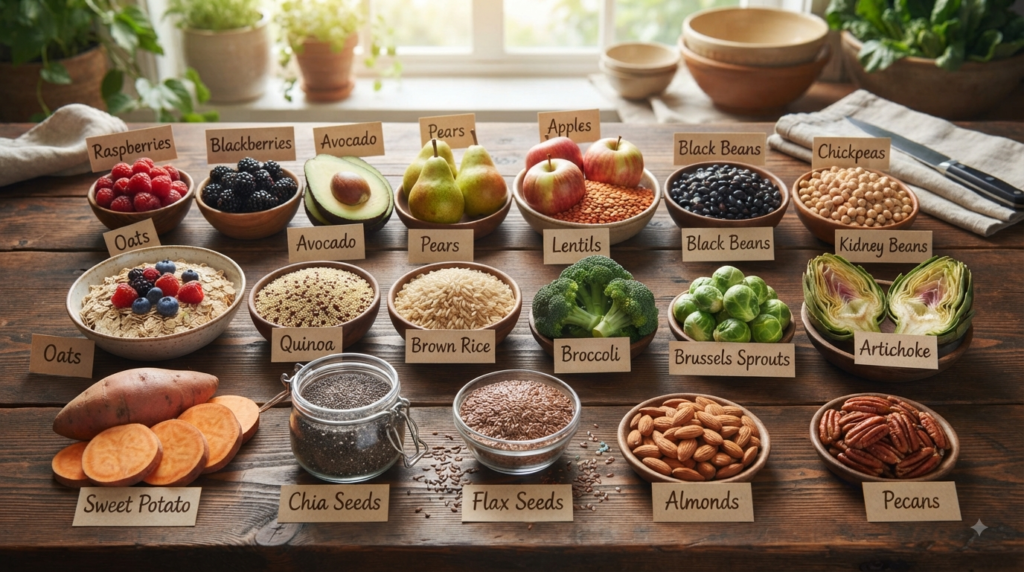
Foods with fiber are an important part of a healthy diet. Fiber helps your digestion, keeps your bowel movements regular, and supports good gut health. You can find fiber naturally in foods like fruits, vegetables, beans, lentils, whole grains, nuts, and seeds.
Your body does not fully digest fiber. Some fiber helps make stools softer and easier to pass, while other types of fiber help support healthy bacteria in your gut.
Adding different foods with fiber to your daily meals is an easy way to support your digestive health. But if you suddenly eat a lot of fiber, you may feel bloated or have gas. It is better to increase fiber slowly and drink enough water throughout the day..
- What Is Dietary Fiber?
Dietary fiber is a type of carbohydrate found primarily in plant foods that the body does not completely digest.
There are two broad types:
Soluble Fiber
Soluble fiber dissolves in water and forms a gel-like substance. It is found in foods such as oats, barley, beans, chia seeds, and some fruits.
Insoluble Fiber
Insoluble fiber does not dissolve in water. It helps add bulk to stool and can support regular bowel movements. Whole grains, vegetables, nuts, and seeds are examples.
Many plant foods contain a combination of both types. Therefore, eating a variety of foods with fiber is a practical way to obtain different types of dietary fiber.
- How Fiber Supports Gut Health
Fiber can support the digestive system in several ways.
Supports Regular Bowel Movements
Fiber can add bulk to stool and help promote regular bowel movements, particularly when you also consume adequate fluids.
Supports Beneficial Gut Bacteria
Certain types of fiber can be fermented by microorganisms in the large intestine. This provides fuel for some beneficial gut bacteria.
May Help With Constipation
Increasing fiber-rich foods can help some people with constipation. However, fiber should generally be increased gradually because a sudden increase may cause bloating or gas.
Supports a Balanced Diet
Many foods with fiber also provide vitamins, minerals, antioxidants, protein, and healthy fats, depending on the food.
- 20 Best Foods With Fiber for Better Digestion and Gut Health
- Create photo 16:9 in ultra realistic 8k photo
- Chia Seeds
Chia seeds are small but fiber-rich seeds that are easy to add to everyday meals. They can be mixed into oatmeal, yogurt, smoothies, or used to make chia pudding.
Because chia seeds absorb liquid, consuming them with adequate fluids is a good idea.
Easy idea: Add chia seeds to overnight oats with berries and yogurt.
- Flaxseeds
Flaxseeds provide dietary fiber along with plant-based omega-3 fatty acids. Ground flaxseed is often easier to incorporate into meals than whole seeds.
You can add ground flaxseed to oatmeal, smoothies, yogurt, or homemade baked goods.
Tip: Store ground flaxseed properly to help maintain freshness.
- Raspberries
Raspberries are a flavorful fruit that provides dietary fiber along with vitamins and plant compounds.
They can be eaten fresh or frozen and added to oatmeal, yogurt, smoothies, or salads.
Easy idea: Combine raspberries with plain yogurt and chia seeds for a fiber-rich breakfast.
- Pears
Pears are another useful choice among foods with fiber. Eating the skin, when appropriate and well washed, can provide additional fiber.
Enjoy pears as a snack or slice them into oatmeal, salads, or yogurt.
- Apples
Apples provide fiber, particularly when eaten with their skin. They are also convenient and easy to include in everyday meals.
Try pairing an apple with a small serving of nuts or nut butter for a balanced snack.
- Avocados
Avocados provide dietary fiber as well as unsaturated fats.
They can be added to salads, whole-grain toast, grain bowls, or sandwiches.
Simple idea: Mash avocado onto whole-grain toast and add vegetables for a fiber-containing breakfast or lunch.
- Lentils
Lentils are one of the most useful foods with fiber because they also provide plant-based protein.
They can be used in soups, curries, salads, and grain bowls.
Easy meal: Lentil soup with vegetables and a side of whole-grain bread.
- Chickpeas
Chickpeas provide fiber and plant-based protein. They are versatile and can be used in hummus, salads, soups, and curries.
Roasted chickpeas can also make a crunchy snack.
- Black Beans
Black beans are a fiber-rich legume that can be incorporated into many meals.
Try adding them to tacos, salads, soups, rice bowls, or vegetable dishes.
- Kidney Beans
Kidney beans provide dietary fiber and plant-based protein.
They can be used in bean salads, soups, chili, and curries.
When using canned beans, rinsing them can help remove some of the added sodium from the liquid.
- Oats
Oats are well-known for their soluble fiber, including beta-glucan.
A bowl of oatmeal can be an easy way to add fiber to breakfast.
Try: Oats + berries + chia seeds + nuts.
This combination provides several different sources of foods with fiber in one meal.
- Barley
Barley is a whole grain that provides dietary fiber, including beta-glucan.
It can be added to soups, salads, stews, and grain bowls.
Choosing less-refined whole grains can help increase your overall fiber intake.
- Broccoli
Broccoli provides fiber along with vitamin C, vitamin K, folate, and other nutrients.
It can be steamed, roasted, stir-fried, or added to soups.
Simple idea: Combine roasted broccoli with lentils and brown rice for a fiber-rich meal.
- Brussels Sprouts
Brussels sprouts are another vegetable that can contribute to your daily fiber intake.
Roasting them with a small amount of olive oil and herbs can make an easy side dish.
- Sweet Potatoes
Sweet potatoes provide fiber along with several vitamins and minerals.
Eating the skin when it is properly cleaned can contribute additional fiber.
Try baked sweet potatoes with beans, vegetables, or a protein source for a balanced meal.
- Green Peas
Green peas provide fiber and several nutrients. They can be added to rice dishes, soups, pasta, curries, and vegetable bowls.
Frozen peas can be a convenient option because they are easy to store and prepare.
- Almonds
Almonds provide fiber, protein, and unsaturated fats.
Because nuts are energy-dense, a moderate portion can fit well into a balanced diet.
Try adding almonds to oatmeal, yogurt, salads, or eating them as a snack.
- Popcorn
Plain air-popped popcorn is a whole-grain food and can contribute dietary fiber.
For a healthier option, avoid excessive amounts of butter, salt, sugar, or other high-calorie toppings.
- Whole-Grain Bread
Whole-grain bread can provide more fiber than bread made primarily from refined grains.
When shopping, check the ingredient list and nutrition label for a whole-grain ingredient and meaningful fiber content.
Use whole-grain bread for sandwiches, avocado toast, or alongside soups and salads.
- Other Whole Grains
In addition to oats and barley, whole grains such as brown rice, bulgur, quinoa, and whole-wheat products can contribute to your daily fiber intake.
Rotating different whole grains is a simple way to increase variety in your diet.
- How Much Fiber Do You Need?
Fiber needs vary depending on factors such as age and sex.
For many adults, a general target is around 25–30 grams of fiber per day, although individual needs can differ.
Instead of trying to reach a specific amount through one food, include several foods with fiber throughout the day.
For example:
Breakfast: Oatmeal + berries + chia seeds
Lunch: Chickpea and vegetable salad
Snack: Apple + almonds
Dinner: Lentils + brown rice + broccoli
This approach spreads fiber throughout the day.
- How to Increase Fiber Without Digestive Discomfort
If your current diet is low in fiber, suddenly eating large amounts can cause gas, bloating, or abdominal discomfort.
Try these strategies:
Increase Fiber Gradually
Add one or two fiber-rich foods at a time rather than making a dramatic change overnight.
Drink Enough Fluids
Adequate fluid intake can help fiber work effectively in the digestive tract.
Eat a Variety of Foods
Don’t rely on just one source. Rotate fruits, vegetables, legumes, whole grains, nuts, and seeds.
Pay Attention to Your Body
If a particular food consistently causes discomfort, reduce the amount and discuss persistent symptoms with a healthcare professional.
- High-Fiber Meal Ideas
You don’t need complicated recipes to eat more foods with fiber.
Breakfast
Oatmeal with raspberries, chia seeds, and almonds.
Lunch
Chickpea salad with avocado, broccoli, and whole-grain bread.
Snack
An apple with a small portion of almonds.
Dinner
Lentils with brown rice and roasted vegetables.
Dessert/Snack
Plain yogurt topped with berries and ground flaxseed.
- Soluble vs. Insoluble Fiber
Soluble Fiber Insoluble Fiber
Oats Whole grains
Barley Many vegetables
Beans Nuts
Lentils Seeds
Chia seeds Fruit skins
Many foods with fiber contain both soluble and insoluble fiber, so you don’t necessarily need to calculate how much of each type you’re eating. A varied diet is generally the simplest approach.
- Common Mistakes When Eating More Fiber
Eating Too Much Fiber Too Quickly
A sudden increase can cause gas and bloating
Not Drinking Enough Fluids
Fiber and fluids work together to support normal bowel function.
Depending Only on Fiber Supplements
Whole foods can provide fiber along with other important nutrients.
Eating Only One Type of Fiber-Rich Food
A variety of fruits, vegetables, legumes, grains, nuts, and seeds provides a broader range of nutrients.
Ignoring Persistent Digestive Symptoms
Ongoing constipation, diarrhea, abdominal pain, blood in the stool, unexplained weight loss, or other concerning symptoms should be evaluated by a healthcare professional rather than treated simply by adding more fiber.
- Frequently Asked Questions
What are the best foods with fiber?
Some excellent choices include lentils, chickpeas, beans, chia seeds, flaxseeds, oats, raspberries, pears, apples, avocados, broccoli, and whole grains.
Which foods with fiber are good for constipation?
Fiber-rich foods such as fruits, vegetables, legumes, whole grains, nuts, and seeds may help support regular bowel movements. Increase fiber gradually and maintain adequate fluid intake.
Can foods with fiber improve gut health?
Fiber can support normal digestion, and some types are fermented by beneficial gut microorganisms. A varied diet containing different fiber-rich plant foods can support overall gut health.
How can I increase fiber without bloating?
Increase your fiber intake gradually, drink enough fluids, and introduce different fiber-rich foods in moderate portions.
Are fruits good foods with fiber?
Yes. Fruits such as raspberries, pears, apples, and avocados can contribute meaningful amounts of dietary fiber.
Are chia seeds high in fiber?
Yes. Chia seeds are a concentrated source of dietary fiber and can be added to oatmeal, yogurt, smoothies, and puddings.
10.Conclusion
Eating different foods with fiber can help keep your digestion healthy and support regular bowel movements. There are many good choices, such as chia seeds, oats, fruits, vegetables, beans, lentils, nuts, and whole grains.
You don’t need to depend on just one food. Try to include different fiber-rich foods in your daily meals and increase your fiber intake slowly. Also, drink enough water throughout the day.
If you have ongoing digestive problems or a health condition, talk to a healthcare professional before making big changes to your diet.