
- Introduction
High cholesterol symptoms can be hard to notice because high cholesterol usually does not cause any clear symptoms. A person may have high cholesterol for years and still feel completely healthy. In many cases, it is found only through a blood test.
Cholesterol is a waxy, fat-like substance that your body needs for important functions, such as making hormones, vitamin D, and substances that help with digestion. However, having too much LDL (often called “bad” cholesterol) can lead to plaque buildup in the arteries and increase the risk of heart disease and stroke.
Learning about high cholesterol symptoms, risk factors, and regular cholesterol testing can help you understand your health and take steps to lower your risk.
- What Is High Cholesterol?
High cholesterol means there is too much cholesterol circulating in the blood. Cholesterol travels through the bloodstream attached to proteins called lipoproteins.
The main types include:
LDL cholesterol: Often called “bad” cholesterol because high levels can contribute to plaque buildup in the arteries.
HDL cholesterol: Often called “good” cholesterol because it helps transport cholesterol back toward the liver for processing.
Triglycerides: Another type of fat in the blood. High triglycerides can also contribute to cardiovascular risk.
Total cholesterol: A measurement that combines several types of cholesterol.
Because high cholesterol often produces no noticeable symptoms, a lipid panel blood test is important for finding out whether your cholesterol levels are elevated.
- High Cholesterol Symptoms: Can You Feel Them?
One of the most important things to understand about high cholesterol symptoms is that high cholesterol itself generally does not cause symptoms.
You may feel perfectly normal even when your LDL cholesterol is high. This is why waiting for symptoms before getting your cholesterol checked is not a reliable approach.
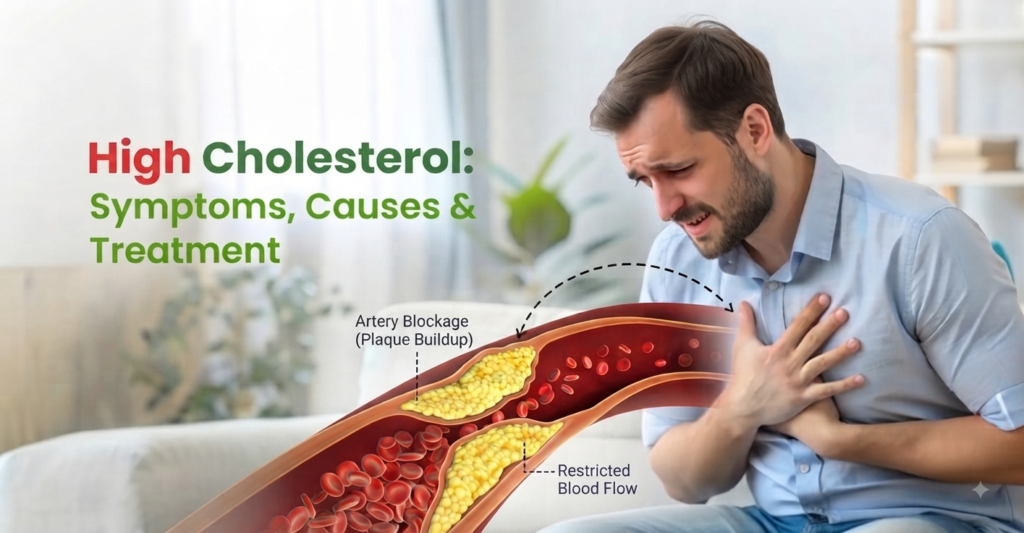
Over time, excess cholesterol can contribute to plaque buildup inside arteries. If this buildup becomes significant, it may reduce blood flow and contribute to conditions such as coronary artery disease or peripheral artery disease.
So, rather than looking for specific high cholesterol symptoms, it is important to know your risk factors and have cholesterol checked when recommended by a healthcare professional.
- Possible Warning Signs of Cholesterol-Related Problems
Although high cholesterol itself usually has no symptoms, complications associated with cholesterol-related artery disease can produce symptoms.
Possible warning signs may include:
Chest pain or pressure
Reduced blood flow to the heart can cause chest discomfort, pressure, or pain, particularly during physical activity.
Shortness of breath
Breathing difficulty can occur with cardiovascular disease and should not automatically be attributed to high cholesterol.
Leg pain while walking
Peripheral artery disease can cause pain, cramping, or weakness in the legs during walking that improves with rest.
Numbness or weakness
Reduced blood flow or a stroke can cause sudden weakness or numbness, particularly on one side of the body.
Sudden difficulty speaking
Sudden trouble speaking, understanding speech, seeing, walking, or maintaining balance can be signs of a stroke and require emergency medical attention.
These are not direct high cholesterol symptoms. Instead, they may indicate cardiovascular complications that can be associated with long-term cholesterol-related artery disease.
- Visible Signs Sometimes Associated With Very High Cholesterol
Certain physical findings can sometimes occur in people with very high cholesterol, particularly inherited forms of high cholesterol.
Xanthomas
Xanthomas are cholesterol-rich deposits that can appear as bumps under or on the skin, sometimes around joints or tendons.
Xanthelasma
Xanthelasma appears as yellowish patches around the eyelids. Although it can be associated with abnormal cholesterol levels, it can also occur in people with normal cholesterol.
Corneal arcus
This is a grayish or whitish ring around the outer part of the cornea. In younger people, it can sometimes be associated with high cholesterol or an inherited cholesterol disorder.
These findings are not definitive high cholesterol symptoms. A blood test is needed to determine cholesterol levels.
- What Causes High Cholesterol?
Several factors can contribute to high cholesterol.
Common causes and risk factors include:
Eating a diet high in saturated fats
Consuming trans fats
Being physically inactive
Having excess body weight
Smoking
Family history of high cholesterol
Certain inherited conditions
Diabetes and some other medical conditions
Certain medications
Increasing age
For some people, genetics play a major role. Familial hypercholesterolemia, for example, can cause very high LDL cholesterol from an early age.
- Who Is at Higher Risk?
Some people have a greater chance of developing high cholesterol. Risk can increase with:
A family history of high cholesterol or early heart disease
Diabetes
High blood pressure
Physical inactivity
Excess body weight
Smoking
Increasing age
Certain genetic conditions
Because many people with high cholesterol experience no high cholesterol symptoms, people with these risk factors should discuss appropriate cholesterol screening with a healthcare professional.
- How Is High Cholesterol Diagnosed?
High cholesterol cannot reliably be diagnosed based on how you feel or by looking for high cholesterol symptoms.
A healthcare professional can evaluate cholesterol using a lipid panel, which may measure:
LDL cholesterol
HDL cholesterol
Total cholesterol
Triglycerides
Your results are interpreted alongside factors such as age, blood pressure, smoking status, diabetes, family history, and overall cardiovascular risk.
Your healthcare professional can tell you how often testing is appropriate for you.
- What Can You Do to Help Manage Cholesterol?
Lifestyle changes can play an important role in managing cholesterol and reducing cardiovascular risk.
Choose more fiber-rich foods
Include foods such as oats, beans, lentils, fruits, vegetables, and whole grains.
Reduce saturated and trans fats
Limit foods high in saturated fat and avoid industrial trans fats where possible.
Stay physically active
Regular physical activity can support cardiovascular health and may improve cholesterol levels.
Maintain a healthy weight
If you have excess weight, gradual weight loss can help improve several cardiovascular risk factors.
Avoid smoking
Stopping smoking benefits cardiovascular health and can reduce overall heart disease risk.
Take prescribed medication when recommended
Some people need cholesterol-lowering medication, particularly when cholesterol is very high or cardiovascular risk is elevated.
- When Should You See a Doctor?
Because high cholesterol symptoms are usually absent, you do not need to wait until you feel unwell to seek evaluation.
Consider discussing cholesterol testing with a healthcare professional if you:
Have a family history of high cholesterol
Have diabetes or high blood pressure
Have previously been told your cholesterol is high
Have several cardiovascular risk factors
Have a history of heart disease or stroke
Seek emergency medical care for symptoms such as severe or persistent chest pressure, sudden weakness or numbness on one side of the body, sudden trouble speaking, or sudden difficulty seeing or walking.
- High Cholesterol Symptoms: Key Takeaway
The most important fact about high cholesterol symptoms is that high cholesterol usually does not cause noticeable symptoms.
You can have high LDL cholesterol while feeling completely healthy. The most reliable way to identify high cholesterol is through a blood test.
Knowing your cholesterol levels, understanding your cardiovascular risk, eating a balanced diet, staying active, and following medical advice can help protect your long-term heart and blood-vessel health.
12.Frequently Asked Questions About High Cholesterol Symptoms
What are the first high cholesterol symptoms?
Most people do not notice any high cholesterol symptoms in the early stages. High cholesterol is usually found through a simple blood test.
Can high cholesterol make you feel tired?
High cholesterol itself usually does not make you feel tired. If you have ongoing or unexplained tiredness, it is a good idea to talk with a healthcare professional.
Can high cholesterol cause headaches?
Headaches are not a common sign of high cholesterol. If you often have headaches, there may be another reason for them.
Can you have high cholesterol without symptoms?
Yes. In fact, this is very common. You can have high cholesterol and still feel completely normal.
How do you know if your cholesterol is high?
The best way to know is through a blood test called a lipid panel. It checks your LDL, HDL, total cholesterol, and triglyceride levels.
How often should cholesterol be checked?
It depends on your age, health, family history, and other risk factors. Your doctor or healthcare professional can tell you how often you should have it checked.
Can high cholesterol be reduced naturally?
Healthy lifestyle habits can help. Eating more fruits, vegetables, whole grains, and fiber-rich foods, exercising regularly, maintaining a healthy weight, and avoiding smoking can support healthy cholesterol levels. Some people may also need cholesterol-lowering medicine as recommended by their doctor.