
Introduction
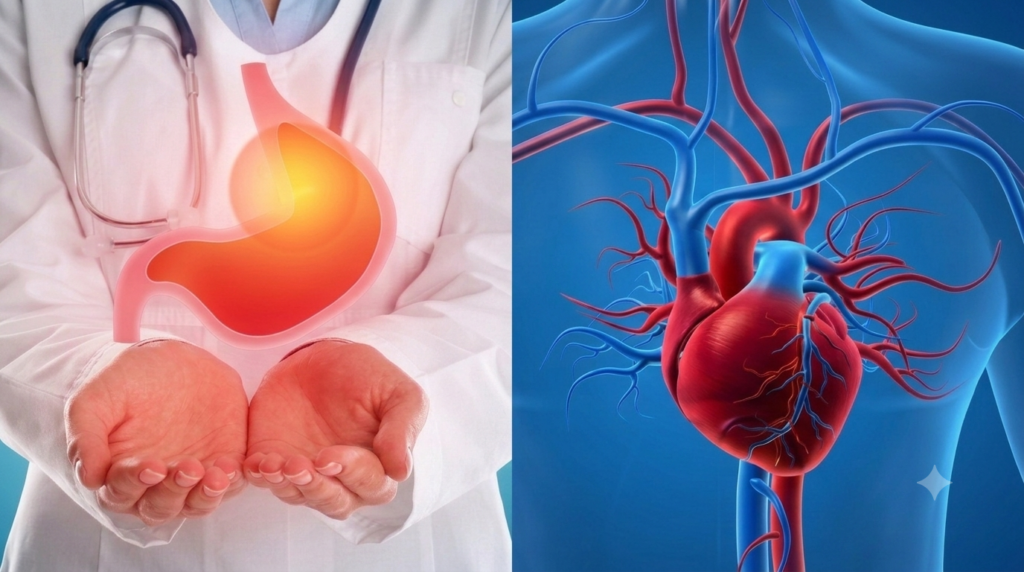
Adding foods high in fiber to your daily diet is one of the easiest ways to support better digestion and overall health. Although fiber isn’t fully digested by the body, it plays an important role in maintaining a healthy digestive system, supporting gut health, and helping you feel full for longer.
Many people don’t get enough fiber because processed foods often replace whole, plant-based foods. Fortunately, increasing your fiber intake is simple. By eating more fruits, vegetables, whole grains, legumes, nuts, and seeds, you can naturally boost your fiber intake and improve your overall well-being.
In this guide, you’ll learn about the best foods high in fiber, their health benefits, and easy ways to include them in your everyday meals.
What Are Foods High in Fiber?
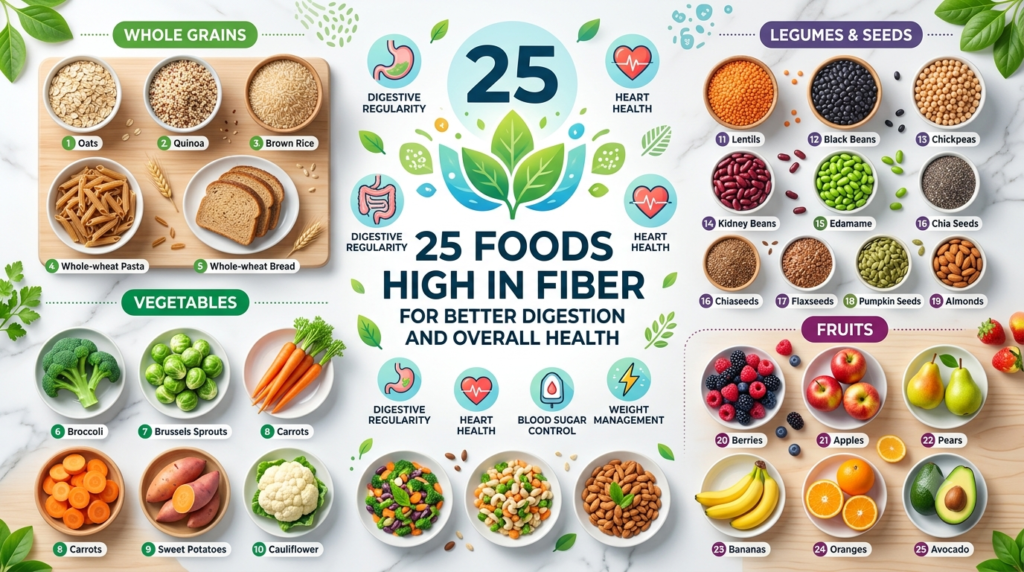
Foods high in fiber are natural foods that contain generous amounts of dietary fiber. Dietary fiber is found only in plant-based foods and is generally divided into two main categories. Both types work together to support a healthy digestive system.
Soluble Fiber
Soluble fiber mixes with water inside the digestive tract to form a soft, gel-like substance. This process slows digestion, helping you feel satisfied for longer after meals. It also supports healthy cholesterol levels and contributes to balanced blood sugar levels when included as part of an overall healthy eating pattern.
Common sources of soluble fiber include:
- Oats
- Apples
- Pears
- Beans
- Lentils
- Chia seeds
Insoluble Fiber
Unlike soluble fiber, insoluble fiber doesn’t dissolve in water. Instead, it adds bulk to stool and helps food move smoothly through the intestines. This supports regular bowel movements and promotes overall digestive comfort.
Excellent sources include:
- Whole wheat
- Brown rice
- Broccoli
- Carrots
- Spinach
- Nuts
- Seeds
Since many plant foods naturally contain both soluble and insoluble fiber, eating a variety of foods high in fiber is the best way to enjoy their combined benefits.
Why Are Foods High in Fiber Important?
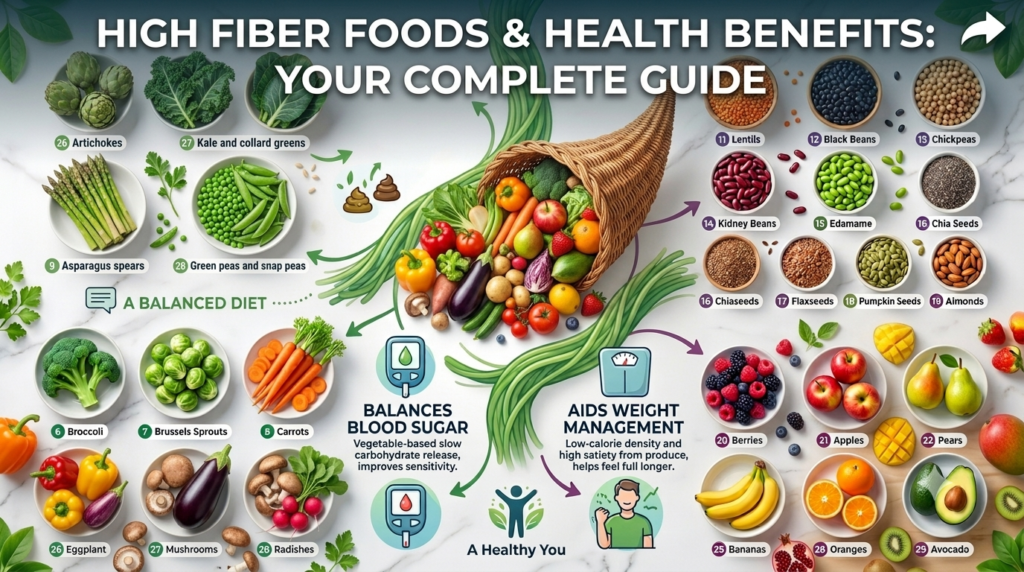
Adding more foods high in fiber to your meals offers much more than digestive support. A balanced, fiber-rich diet contributes to long-term health in several ways.
- Supports Healthy Digestion
One of fiber’s most recognized benefits is its ability to keep the digestive system working efficiently. Fiber helps maintain regular bowel movements and supports comfortable digestion.
Example:
Starting your morning with oatmeal topped with berries and chia seeds is an easy way to increase fiber intake naturally.
- Nourishes Your Gut Microbiome
Your digestive tract contains trillions of beneficial bacteria that help break down food and support overall health. Certain types of fiber act as food for these beneficial microbes, encouraging a healthy gut environment.
A healthy gut microbiome is linked with better digestion and overall wellness.
- Helps You Feel Full Longer
Many foods high in fiber take longer to digest than refined foods. Because digestion slows down, you may stay satisfied for a longer period after eating.
Example:
Choosing an apple with a handful of almonds instead of sugary snacks may help reduce unnecessary snacking between meals.
- Supports Heart Health
Foods such as oats, barley, beans, and flaxseeds contain soluble fiber, which can support healthy cholesterol levels when eaten as part of a balanced diet.
Eating fiber-rich foods regularly is one simple habit that contributes to long-term heart health.
- Helps Maintain Healthy Blood Sugar Levels
Fiber slows the absorption of carbohydrates during digestion. This can contribute to steadier blood sugar levels after meals, especially when meals include whole grains, legumes, vegetables, and fruits instead of refined carbohydrates.
- Encourages Healthier Eating Habits
People who regularly consume foods high in fiber often eat more fruits, vegetables, whole grains, and legumes while naturally reducing highly processed foods.
This simple dietary shift improves the overall nutritional quality of meals without requiring restrictive dieting.
How Much Fiber Do You Need?
While individual needs vary by age and health status, general recommendations are:
- Women: Around 25 grams of fiber daily
- Men: Around 38 grams of fiber daily
If your current fiber intake is low, increase it gradually and drink plenty of water to help your digestive system adjust comfortably.
What’s Next?
Now that you understand why foods high in fiber are essential for digestion and overall health, the next section will introduce 25 of the best high-fiber foods, along with their nutritional benefits and simple ways to include them in your everyday meals.