
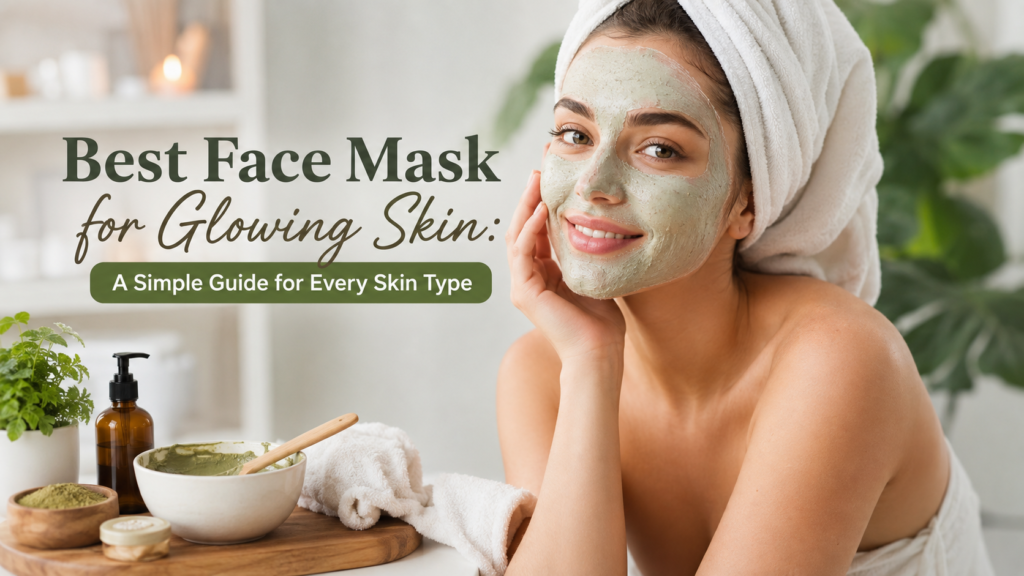
Healthy-looking skin doesn’t need a complicated skincare routine. A good face mask can add moisture, control extra oil, and leave your skin looking fresh and smooth.
But the Best Face Mask for Glowing Skin depends on your skin type. What works for oily skin may not be right for dry or sensitive skin.
In this guide, you’ll learn how to choose the right mask, which ingredients to look for, how often to use it, and what mistakes to avoid.
What Is the Best Face Mask for Glowing Skin?
There is no single Best Face Mask for Glowing Skin for everyone. The right mask depends on whether your skin is dry, oily, combination, sensitive, or acne-prone.
For dry skin, look for hydrating ingredients like aloe vera, glycerin, hyaluronic acid, or oatmeal. For oily skin, clay can help absorb excess oil. Sensitive skin usually does better with simple, fragrance-free formulas.
A face mask is a helpful extra step, but it should not replace your daily cleanser, moisturizer, or sunscreen.
Best Face Mask for Different Skin Types
Best Face Mask for Dry Skin
Dry skin often feels tight, rough, or flaky. If you have dry skin, the Best Face Mask for Glowing Skin should focus mainly on hydration and supporting the skin barrier.
Look for ingredients such as:
– Hyaluronic acid
– Glycerin
– Aloe vera
– Ceramides
– Colloidal oatmeal
Creamy or gel-based hydrating masks are often more suitable than strong clay or exfoliating masks.
Avoid using very drying masks too frequently because they can leave already-dry skin feeling uncomfortable.
Best Face Mask for Oily Skin
Oily skin produces more sebum, which can make the face look shiny and may contribute to clogged pores.
For oily skin, the Best Face Mask for Glowing Skin may contain ingredients such as clay that can absorb excess oil.
Clay masks can be useful, but more is not always better. Overusing oil-absorbing products can leave the skin dry and irritated.
A simple routine is often better: cleanse gently, use a suitable mask occasionally, moisturize, and wear sunscreen during the day.
Best Face Mask for Combination Skin
Combination skin usually has both oily and dry areas. For example, the forehead, nose, and chin may become oily while the cheeks feel normal or dry.
The Best Face Mask for Glowing Skin for combination skin may depend on the area you’re treating.
You can consider a technique called multi-masking. For example, a clay mask can be applied to an oily T-zone while a hydrating mask is used on drier areas.
This allows you to address different skin needs without treating your entire face the same way.
Best Face Mask for Sensitive Skin
Sensitive skin can react easily to fragrances, harsh exfoliants, or certain active ingredients.
When choosing the Best Face Mask for Glowing Skin for sensitive skin, look for a gentle, fragrance-free formula with soothing ingredients such as colloidal oatmeal or aloe vera.
Before applying a new product to your entire face, consider patch testing it on a small area first.
If a product causes significant burning, itching, swelling, or persistent redness, wash it off and stop using it.
Best Face Mask for Acne-Prone Skin
Acne-prone skin needs gentle care. A face mask may help with oiliness, but it shouldn’t be used as a substitute for proven acne treatment.
The Best Face Mask for Glowing Skin for acne-prone skin should avoid unnecessary irritation. Depending on the formulation, ingredients such as clay or salicylic acid may be useful for oily or blemish-prone skin.
However, stronger active ingredients can irritate some people, especially when combined with other acne treatments.
If acne is persistent, painful, or severe, it’s better to speak with a dermatologist.
Best Ingredients for a Glowing Skin Face Mask
The ingredients in a mask matter more than attractive packaging or marketing claims.
Here are some ingredients commonly used in products designed to support healthy-looking skin.
Aloe Vera
Aloe vera is commonly used in skincare products because it can provide a soothing and hydrating feel. It may be especially appealing for skin that feels dry or irritated.
Hyaluronic Acid
Hyaluronic acid is a humectant that helps attract and retain water in the skin. It is commonly found in hydrating masks and can help skin feel softer and more moisturized.
Vitamin C
is an antioxidant used in skincare to support brighter-looking skin and help protect against environmental oxidative stress.
If you’re using a vitamin C product, follow the manufacturer’s instructions and introduce it gradually if your skin is sensitive.
Niacinamide
Niacinamide, a form of vitamin B3, is widely used in skincare. It can support the skin barrier and may help improve the appearance of uneven tone and excess oil.
Colloidal Oatmeal
Colloidal oatmeal is known for its soothing and moisturizing properties and can be a good option for dry or sensitive skin.
Clay
Clay can absorb excess oil from the skin, making clay masks particularly popular among people with oily skin.
However, leaving a clay mask on for too long or using it too frequently can make the skin feel dry.
Honey
Honey is a humectant and is often used in skincare for its moisturizing properties. If you’re considering a homemade honey mask, make sure you’re not allergic and avoid applying it to broken or irritated skin.
Homemade Face Masks for Glowing Skin
Homemade masks can be simple, but natural ingredients aren’t automatically safe for everyone.
A gentle oatmeal-based mask can be a reasonable option for people looking for a soothing skincare treatment. You can also find ready-made masks containing ingredients such as aloe vera, oatmeal, or honey.
Be careful with popular DIY ingredients such as lemon juice, baking soda, or undiluted essential oils. These can irritate the skin and may cause more problems than benefits.
If you’re looking for the Best Face Mask for Glowing Skin, a properly formulated commercial product may sometimes be a safer and more predictable choice than experimenting with harsh kitchen ingredients.
How to Choose the Right Face Mask for Your Skin
Choosing the Best Face Mask for Glowing Skin starts with understanding what your skin actually needs.
First, identify your skin type. Is it usually dry, oily, combination, sensitive, or acne-prone?
Next, decide what you want the mask to do. Are you looking for more hydration, less oil, smoother-looking skin, or a soothing effect?
Then check the ingredient list. Look for ingredients that match your goal and avoid products containing ingredients you already know irritate your skin.
Finally, don’t assume that an expensive product is automatically better. A simple formula that suits your skin can be more useful than a complicated product that causes irritation.
How Often Should You Use a Face Mask?
How often you should use a face mask depends on the product and your skin type.
Hydrating masks may be suitable more frequently when used according to their directions, while clay or exfoliating masks may need to be used less often.
If your skin becomes dry, tight, red, itchy, or irritated after using a mask, reduce how often you use it or stop using the product.
The goal of the Best Face Mask for Glowing Skin routine is to support your skin—not overwhelm it.
How to Apply a Face Mask Correctly
Getting the most from the Best Face Mask for Glowing Skin isn’t only about the product. How you use it matters too.
Step 1: Cleanse Your Face
Start with a gentle cleanser to remove dirt, makeup, sunscreen, and excess oil.
Step 2: Apply the Mask
Apply the mask as directed. Avoid the delicate skin around the eyes and lips unless the product specifically says it is safe for those areas.
Step 3: Follow the Recommended Time
Don’t assume that leaving a mask on longer will produce better results. Follow the instructions on the product.
Step 4: Remove Gently
If the mask needs to be rinsed off, use lukewarm water and avoid aggressive rubbing.
Step 5: Moisturize
Apply a suitable moisturizer afterward to help keep your skin comfortable and hydrated.
Step 6: Use Sunscreen During the Day
Sunscreen is one of the most important parts of a skincare routine, particularly if you’re using products containing exfoliating or other active ingredients.
Common Face Mask Mistakes to Avoid
Even the Best Face Mask for Glowing Skin won’t help if you use it incorrectly.
Avoid these common mistakes:
– Leaving a mask on longer than recommended
– Using an exfoliating mask too frequently
– Scrubbing your face aggressively
– Using several irritating active ingredients at once
– Applying products to broken or severely irritated skin
– Skipping moisturizer after a drying mask
– Using lemon juice or baking soda as DIY skincare treatments
– Expecting one mask to permanently transform your skin
Healthy-looking skin usually comes from consistent, gentle skincare rather than a single product.
Face Mask vs. Serum vs. Moisturizer
A face mask, serum, and moisturizer each have different roles.
A face mask is generally an occasional treatment designed to provide targeted benefits such as hydration or oil absorption.
A serum is usually a lightweight product formulated with specific active ingredients. Depending on the formula, it may target concerns such as hydration, uneven tone, or signs of aging.
A moisturizer helps keep the skin hydrated and supports the skin barrier.
You don’t necessarily have to choose between them. A simple routine might include a cleanser, treatment product if needed, moisturizer, and sunscreen, with a suitable face mask used occasionally.
Frequently Asked Questions
Which face mask is best for glowing skin?
The Best Face Mask for Glowing Skin depends on your skin type. Hydrating masks may be better for dry skin, clay-based masks may suit oily skin, and gentle fragrance-free masks may be preferable for sensitive skin.
How often should I use a face mask for glowing skin?
Follow the instructions for your particular product. Hydrating masks may be used more frequently, while clay and exfoliating masks generally require less frequent use.
Is a homemade face mask good for glowing skin?
Some gentle homemade masks may temporarily make skin feel softer or more hydrated, but natural ingredients can still cause irritation or allergies. Avoid harsh DIY ingredients such as lemon juice and baking soda.
Which face mask is best for dry skin?
A hydrating mask containing ingredients such as glycerin, hyaluronic acid, aloe vera, or colloidal oatmeal can be a good choice for dry skin.
Which face mask is best for oily skin?
A mask containing clay may help absorb excess oil. However, oily skin still needs moisturizer because excessive drying can lead to irritation.
Can sensitive skin use face masks?
Yes, but sensitive skin generally benefits from simple, gentle, fragrance-free products. Patch testing a new product can help reduce the risk of a widespread reaction.
How long should I leave a face mask on?
Always follow the instructions provided with the product. Leaving a mask on longer than recommended doesn’t necessarily make it more effective and may increase irritation.
Best Face Mask for Glowing Skin: A Simple Guide for Every Skin Type
Healthy skin doesn’t need a complicated routine. A good face mask can add extra moisture, remove extra oil, and make your skin look fresh and smooth.
But the Best Face Mask for Glowing Skin is different for everyone. What works for oily skin may not suit dry or sensitive skin.
In this guide, you’ll learn how to pick the right face mask for your skin type, what ingredients to look for, how often to use it, and common mistakes to avoid.
What Is the Best Face Mask for Glowing Skin?
There is no single Best Face Mask for Glowing Skin that works for all people. It depends on your skin type—dry, oily, combination, sensitive, or acne-prone.
A good face mask should keep your skin healthy, add moisture, or gently remove extra oil without causing irritation.
For dry skin, hydrating ingredients like glycerin, hyaluronic acid, aloe vera, and oatmeal work well. For oily skin, clay masks can help control oil. Sensitive skin usually needs simple, fragrance-free products.
A face mask is just an extra step in skincare. It does not replace cleansing, moisturizing, or sunscreen.
Best Face Mask for Different Skin Types
Best Face Mask for Dry Skin
Dry skin often feels tight or rough. The Best Face Mask for Glowing Skin for dry skin should focus on hydration.
Good ingredients include:
– Hyaluronic acid
– Glycerin
– Aloe vera
– Ceramides
– Colloidal oatmeal
Cream or gel masks are usually better than strong clay masks.
Avoid using drying masks too often, as they can make skin feel worse.
Best Face Mask for Oily Skin
Oily skin produces extra oil, which can make the face look shiny or clog pores.
The Best Face Mask for Glowing Skin for oily skin often includes clay, which helps absorb oil.
But don’t overuse it. Too much oil control can dry out and irritate the skin.
A simple routine works best: gentle cleansing, occasional mask use, moisturizing, and sunscreen.
Best Face Mask for Combination Skin
Combination skin is oily in some areas and dry in others.
The Best Face Mask for Glowing Skin for this skin type may need different treatments for different areas.
You can try multi-masking—for example, clay on the oily T-zone and a hydrating mask on dry areas.
Best Face Mask for Sensitive Skin
Sensitive skin reacts easily to strong ingredients and fragrances.
The Best Face Mask for Glowing Skin for sensitive skin should be gentle and fragrance-free. Ingredients like aloe vera and oatmeal are good choices.
Always do a patch test before using a new product on your face.
If you feel burning, itching, or redness, stop using it right away.
Best Face Mask for Acne-Prone Skin
Acne-prone skin needs gentle care. Masks can help with oil, but they are not a full acne treatment.
The Best Face Mask for Glowing Skin for acne-prone skin may include clay or salicylic acid, but strong products can sometimes irritate the skin.
If acne is severe or painful, it’s best to see a dermatologist.
Best Ingredients for a Glowing Skin Face Mask
Ingredients matter more than packaging or brand names.
Aloe Vera
Soothes and hydrates the skin.
Hyaluronic Acid
Helps the skin hold moisture and stay soft.
Vitamin C
Helps brighten the skin and protect it from damage.
Niacinamide
Helps improve skin tone and control oil.
Colloidal Oatmeal
Calms and moisturizes sensitive or dry skin.
Clay
Removes extra oil from the skin.
Honey
Helps keep skin soft and hydrated.
Homemade Face Masks for Glowing Skin
Homemade masks can be simple, but not all natural ingredients are safe.
Oatmeal-based masks are usually gentle and soothing.
Be careful with lemon juice, baking soda, or strong essential oils, as they can irritate the skin.
Sometimes, ready-made products are safer and more reliable than DIY masks.
How to Choose the Right Face Mask for Your Skin
To find the Best Face Mask for Glowing Skin, first understand your skin type.
Then decide what you want—hydration, oil control, soothing, or brightening.
Check the ingredient list and avoid anything that has caused irritation before.
Expensive products are not always better. Simple formulas often work best.
How Often Should You Use a Face Mask?
It depends on the product and your skin type.
Hydrating masks can be used more often, while clay or exfoliating masks should be used less.
If your skin feels dry, red, or irritated, reduce usage.
How to Apply a Face Mask Correctly
Step 1: Clean Your Face
Wash your face gently.
Step 2: Apply the Mask
Avoid eyes and lips unless allowed.
Step 3: Follow Timing
Do not leave it longer than instructed.
Step 4: Rinse Gently
Use lukewarm water.
Step 5: Moisturize
Apply moisturizer after removing the mask.
Step 6: Use Sunscreen
Always use sunscreen during the day.
Common Face Mask Mistakes to Avoid
– Leaving mask on too long
– Overusing exfoliating masks
– Scrubbing skin too hard
– Mixing too many strong products
– Using DIY irritants like lemon or baking soda
– Skipping moisturizer
Good skin comes from simple and consistent care.
Face Mask vs Serum vs Moisturizer
A face mask is an occasional treatment.
A serum targets specific skin concerns.
A moisturizer keeps skin hydrated every day.
All three can be used together in a routine.
Frequently Asked Questions
Which face mask is best for glowing skin?
It depends on your skin type—hydrating for dry skin, clay for oily skin, and gentle formulas for sensitive skin.
How often should I use a face mask?
Follow product instructions. Usually 1–3 times a week is enough.
Are homemade face masks good?
Some are gentle, but others can irritate skin. Be careful with DIY ingredients.
Which mask is best for dry skin?
Hydrating masks with aloe vera, hyaluronic acid, or oatmeal.
Which mask is best for oily skin?
Clay masks can help control oil.
Can sensitive skin use face masks?
Yes, but only gentle and fragrance-free ones.
How long should I leave a mask on?
Only as long as the product instructions say.
Final Thoughts
The Best Face Mask for Glowing Skin is not always the most expensive one. The best choice is the one that suits your skin type and does not cause irritation.
Dry skin needs extra moisture, oily skin needs gentle oil control, and sensitive skin needs simple and gentle products.
Remember, a face mask is only one part of a good skincare routine. Daily cleansing, moisturizing, sunscreen, enough sleep, and a healthy diet are also important for healthy-looking skin.
Keep your skincare routine simple, use products regularly, and give your skin some time to show results.
Disclaimer: This article is for general information only and is not medical advice. If you have a serious or ongoing skin problem, talk to a dermatologist.