
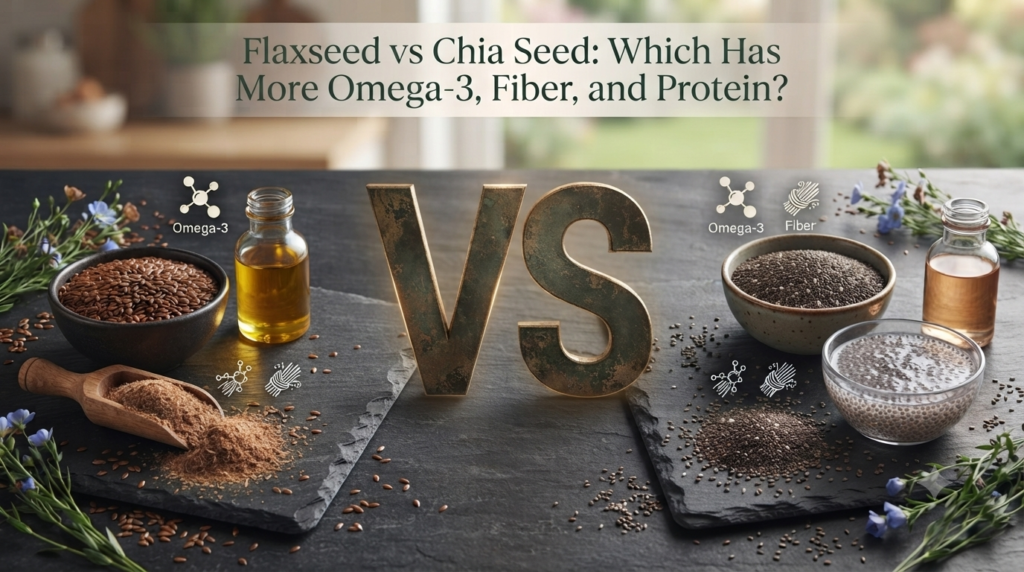
- Introduction
- Flaxseed and chia seeds are both popular healthy foods. They are rich in fiber, healthy fats, plant-based omega-3, and other important nutrients. But they are not exactly the same.
If you’re wondering which is better for omega-3, fiber, or protein, it depends on the nutrient and the amount you eat. In this guide, we’ll compare flaxseed vs chia seed in simple terms and help you understand which one may be a better choice for your diet..
- What Is Flaxseed?
Flaxseed, also called linseed, comes from the flax plant. It is available as whole seeds, ground flaxseed, and flaxseed oil.
One of the most notable nutritional features of flaxseed is its high content of alpha-linolenic acid (ALA), a plant-based omega-3 fatty acid. Flaxseed also provides dietary fiber, protein, and other plant compounds called lignans.
For better nutrient availability, ground flaxseed is generally easier for the body to access than whole flaxseeds, which may pass through the digestive tract relatively intact.
- What Are Chia Seeds?
Chia seeds come from the Salvia hispanica plant and have become popular because of their impressive nutritional profile.
They contain fiber, plant-based omega-3 ALA, protein, healthy fats, calcium, magnesium, and other nutrients. Chia seeds also have the unusual ability to absorb liquid and form a gel-like consistency.
This makes them particularly useful in foods such as chia pudding, smoothies, yogurt, and oatmeal.
- Flaxseed vs Chia Seed: Nutrition Comparison
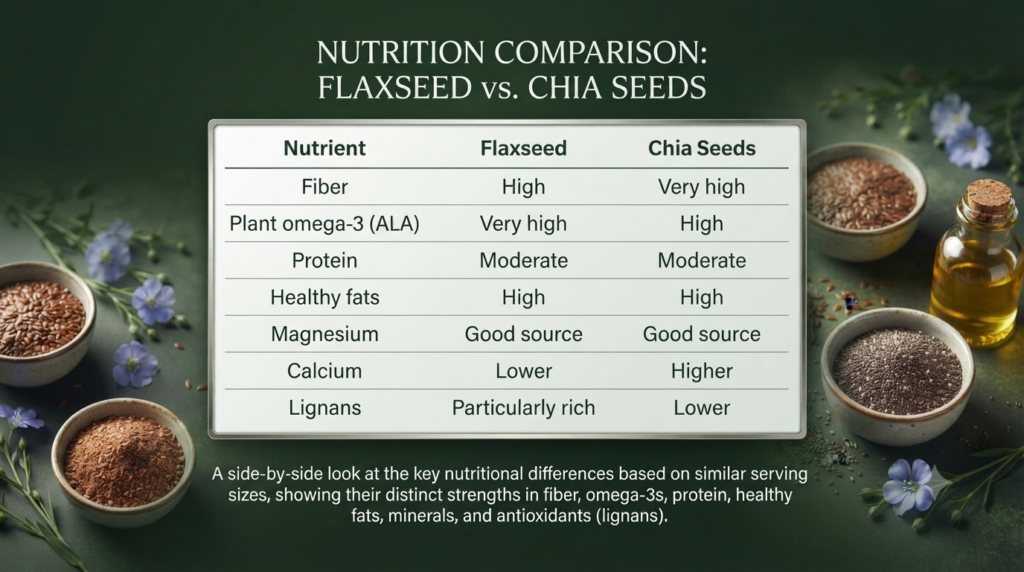
The easiest way to understand flaxseed vs chia seed is to compare similar serving sizes.
Nutrient Flaxseed Chia Seeds
Exact amounts can vary depending on whether you compare whole seeds, ground flaxseed, and the serving size used.
Key takeaway: Both are nutrient-dense, but they have slightly different strengths.
- Flaxseed vs Chia Seed: Which Has More Omega-3?
When comparing flaxseed vs chia seed for omega-3, both are excellent plant sources of ALA (alpha-linolenic acid).
Flaxseed is particularly rich in ALA and is often considered one of the strongest plant-based sources of this omega-3 fatty acid. Chia seeds also provide a substantial amount of ALA.
However, it’s important to understand that ALA is not the same as EPA and DHA, the omega-3 fatty acids commonly found in fatty fish and certain seafood.
The body can convert ALA into EPA and DHA, but the conversion is limited.
Bottom line: Both seeds can contribute valuable plant-based omega-3, with flaxseed generally having an advantage for ALA per comparable weight.
- Flaxseed vs Chia Seed: Which Has More Fiber?
Fiber is another important part of the flaxseed vs chia seed comparison.
Both seeds contain a combination of soluble and insoluble fiber. Chia seeds are especially well known for their high fiber content, while flaxseed also provides a substantial amount.
Fiber can help support:
Regular bowel movements
Digestive health
Feelings of fullness
A healthy overall diet
If you’re increasing your fiber intake, do it gradually and drink adequate fluids to reduce the chance of bloating or digestive discomfort.
Bottom line: Chia seeds are generally a particularly strong choice when your main goal is maximizing fiber.
- Flaxseed vs Chia Seed: Which Has More Protein?
Neither flaxseed nor chia seeds should be considered a major protein source compared with foods such as beans, lentils, eggs, dairy, fish, or meat.
However, both provide useful amounts of plant protein.
When comparing flaxseed vs chia seed, their protein contents are relatively similar, although the exact amount depends on the serving size and product.
For a balanced diet, you can combine either seed with other protein-rich foods such as Greek yogurt, nuts, legumes, tofu, or eggs.
- Flaxseed vs Chia Seed for Weight Management
Neither flaxseed nor chia seeds is a magic weight-loss food.
However, their fiber, healthy fats, and protein can contribute to meals that are more filling. Feeling satisfied after eating may make it easier for some people to manage overall food intake.
For example, adding chia seeds to yogurt or ground flaxseed to oatmeal can increase the nutritional value of a meal without requiring complicated recipes.
The bigger picture matters most: overall calorie intake, physical activity, sleep, and dietary quality all play important roles in weight management.
- Other Potential Health Benefits
The flaxseed vs chia seed comparison isn’t only about omega-3, fiber, and protein.
Flaxseed
Flaxseed provides ALA, fiber, and lignans—plant compounds that have attracted considerable scientific interest. Including flaxseed as part of a balanced diet may support overall cardiovascular and digestive health.
Chia Seeds
Chia seeds provide fiber, ALA, protein, calcium, magnesium, and other nutrients. Their high fiber content can make them a convenient addition to a nutrient-rich diet.
Importantly, these foods should be viewed as parts of a healthy diet, not treatments or cures for diseases.
Aa
- Possible Side Effects and Precautions
Although flaxseed and chia seeds are generally well tolerated by many people, eating large amounts suddenly can cause gas, bloating, or abdominal discomfort because of their fiber content.
A few practical tips:
Start with a small amount if you’re not used to high-fiber foods.
Increase your intake gradually.
Drink enough fluids.
Consider ground flaxseed rather than relying only on whole flaxseed.
If you have a medical condition or take regular medication, ask a healthcare professional whether adding large amounts of these seeds is appropriate for you.
- How to Eat Flaxseed and Chia Seeds
Easy ways to eat flaxseed
Mix ground flaxseed into oatmeal.
Add it to smoothies.
Stir it into yogurt.
Add it to homemade muffins or bread.
Sprinkle it over cereal.
Easy ways to eat chia seeds
Make chia pudding.
Add them to smoothies.
Mix them into yogurt.
Add them to overnight oats.
Sprinkle them over fruit or cereal.
You can also include both flaxseed and chia seeds in your diet if you enjoy them and they fit your nutritional needs.
- Flaxseed vs Chia Seed: Which One Should You Choose?
There isn’t one universal winner in the flaxseed vs chia seed debate.
Choose flaxseed if you particularly want a food rich in ALA omega-3 and lignans, and you don’t mind using ground seeds.
Choose chia seeds if you want a convenient, fiber-rich seed that can absorb liquid and requires no grinding.
And you don’t necessarily have to choose just one. Using both can provide variety and different nutrients.
- Frequently Asked Questions
Is flaxseed healthier than chia seeds?
Neither is universally healthier. Flaxseed vs chia seed depends on what you’re looking for nutritionally. Both can be excellent additions to a balanced diet.
Which has more omega-3?
Both contain ALA, but flaxseed is generally particularly rich in ALA.
Which has more fiber?
Both are high in fiber, with chia seeds generally being especially fiber-rich.
Which has more protein?
Both provide moderate amounts of plant protein, and the difference depends on the serving size.
Can you eat chia seeds and flaxseed together?
Yes. They can be combined in foods such as oatmeal, smoothies, yogurt, and overnight oats.
Should flaxseed be ground?
Ground flaxseed is generally easier to digest and allows you to access more of the nutrients inside the seed.
- Conclusion
The flaxseed vs chia seed comparison doesn’t have a single winner.
Flaxseed stands out for its ALA omega-3 content and lignans, while chia seeds are particularly impressive for their fiber content and convenience.
Instead of focusing on which seed is “better,” consider what your overall diet needs. Including either—or both—in reasonable portions can be a simple way to add fiber, healthy fats, plant-based omega-3, and other nutrients to your meals.
Final takeaway: Flaxseed and chia seeds are both nutritious choices, and variety is often more valuable than choosing only one.