

Introduction
Fish oil is a popular source of omega-3 fatty acids, nutrients that play an important role in supporting overall health. Many people take fish oil supplements because they may help maintain heart, brain, and joint health as part of a balanced lifestyle. These well-known benefits of fish oil have made it one of the most widely used dietary supplements worldwide.The key nutrients in fish oil are EPA (eicosapentaenoic acid) and DHA (docosahexaenoic acid). EPA supports cardiovascular health and normal inflammatory processes, while DHA is essential for healthy brain and eye function. Since the body cannot produce enough omega-3s on its own, it’s important to get them from fatty fish like salmon, mackerel, and sardines or from high-quality fish oil supplements.In this article, you’ll discover the top benefits of fish oil, how it supports heart, brain, and joint health, recommended intake, possible side effects, and tips for choosing the right supplement to meet your health goals.
- What is fish oil?
- Why omega-3 fatty acids are essential for overall health
- Brief overview of EPA and DHA
- What readers will learn in this article
What Is Fish Oil?
Understanding Fish Oil
- Natural source of omega-3 fatty acids
- EPA vs. DHA
- How fish oil differs from plant-based omega-3s (ALA)
Common Sources of Fish Oil
- Salmon
- Mackerel
- Sardines
- Anchovies
- Fish oil supplements
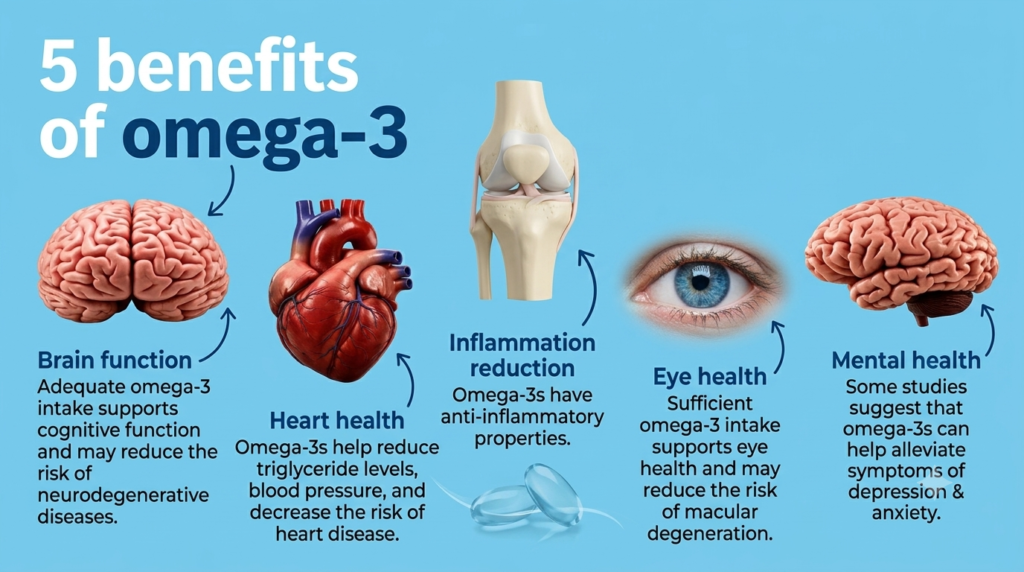
Top Heart Health Benefits of Fish Oil
Supports Healthy Cholesterol Levels
- Helps reduce triglycerides
- Supports HDL (“good”) cholesterol
Promotes Healthy Blood Pressure
- How omega-3s support circulation
Reduces Inflammation
- Chronic inflammation and cardiovascular health
Supports Overall Heart Function
- Maintaining a healthy cardiovascular system
Fish Oil Benefits for Brain Health
Supports Cognitive Function
- Memory
- Focus
- Learning
Promotes Healthy Brain Aging
- Role of DHA in aging adults
Supports Mood and Emotional Well-being
- Omega-3 and mental wellness
- Importance of balanced nutrition
Fish Oil Benefits for Joint Health
Helps Reduce Joint Stiffness
- Importance for active individuals
Supports Joint Mobility
- Maintaining flexibility
Helps Manage Exercise Recovery
- Benefits for athletes and fitness enthusiasts
Additional Health Benefits of Fish Oil
Supports Eye Health
Supports Skin Health
May Support Immune Function
Supports Healthy Pregnancy and Baby Development
- Consult a healthcare provider before supplementation during pregnancy.
How Much Fish Oil Should You Take?
Recommended Daily Intake
Factors That Affect Dosage
- Age
- Diet
- Health goals
Food vs. Supplements
Choosing a High-Quality Fish Oil Supplement
What to Look For
- Third-party testing
- Purity certification
- EPA/DHA content
- Freshness
- Sustainability
Common Supplement Forms
- Softgels
- Liquid fish oil
- Krill oil
Are There Any Side Effects?
Common Mild Side Effects
- Fishy aftertaste
- Upset stomach
- Burping
Safety Considerations
- Potential interactions with blood-thinning medications
- Consult a healthcare professional before starting supplements, especially if pregnant, breastfeeding, or managing a medical condition.
Frequently Asked Questions (FAQ)
- Is it better to get omega-3 from fish or supplements?
- Can I take fish oil every day?
- How long does fish oil take to work?
- What is the best time to take fish oil?
- Does fish oil help with inflammation?
- Who should avoid fish oil supplements?
Tips to Maximize Fish Oil Benefits
- Take with meals containing healthy fats
- Follow the recommended dosage
- Store supplements properly
- Pair with a balanced diet and regular exercise
- Choose reputable brands
Conclusion
- Recap the key benefits for heart, brain, and joint health.
- Encourage readers to prioritize omega-3 intake through diet or supplements when appropriate.
- Remind readers that supplements support—but do not replace—a healthy lifestyle.
- End with a call to action, such as inviting readers to share their experiences or explore other nutrition-related articles.